Dublin, 14th January 2026
The Cohab Initiative Secretariat is pleased to announce the commencement of its new strategic plan for the period from 2026 to 2030. This strategy outlines the three main objectives and fourteen supporting goals which Cohab will focus on over this five year period.
As we move through the 2020s, the world continues to face multiple interconnected crises which require interconnected responses and solutions. Biodiversity loss, global health challenges, water and nutrition insecurity, climate change, and persistent threats of civil strife and armed conflict threaten global peace and security, and make the goal of well-being for all the world’s peoples seem perpetually distant.
The causes and impacts of these challenges are often interrelated and global in nature, moving beyond the responsibility of any one country; therefore, they require global responses, and partnerships for planetary health and security that recognise the interdependence of all peoples with one another and our collective reliance on the health of the only planet we can call home.
With each passing year, these challenges become more complex, more interlinked, and require greater collaboration and novel responses. This means that proposed solutions – social, political, theoretical, and practical – must continually adapt and respond to new evidence, emerging risks, and account for the changing needs of communities and societies at all scales. At the same time, they must continue to acknowledge, respect and integrate the multiple perspectives, knowledge systems and experiences which stem from the diversity of human cultures. It is clear that the negative impacts of biodiversity loss on health and well-being are disproportionately borne by developing countries, the poor, and marginalised peoples, whilst these are most often the least responsible for the actions from which these impacts result.
The Cohab Initiative must therefore regularly review our priorities and the actions we take to deliver on our mission, in order to ensure that we continue to respond to these challenges efficiently and effectively; and although these global challenges continue to result in ill health, hardship, poverty, and despair for many millions of people, at Cohab we find great hope and inspiration within the wide community of organisations and individuals who consistently and unfailingly chose to work together to improve global health and well-being, and who constantly seek to innovate and foster new partnerships for the benefit of all life on Earth.
We must also audit our activities so that the partnerships we sustain, support and engage with can continue to grow and improve. We look at the successes of our partners and the progress we have achieved together to see what works and what can be strengthened, and we look at our failings and the gaps in our knowledge and responses to see where and how we need to adapt and do better. We look outside of our networks to involve others whose perspectives are nevertheless important to our understanding of the challenges and how best to respond to them; and we particularly look to peoples and communities whose health is intimately connected with biodiversity but whose voices are unheard or under-represented.
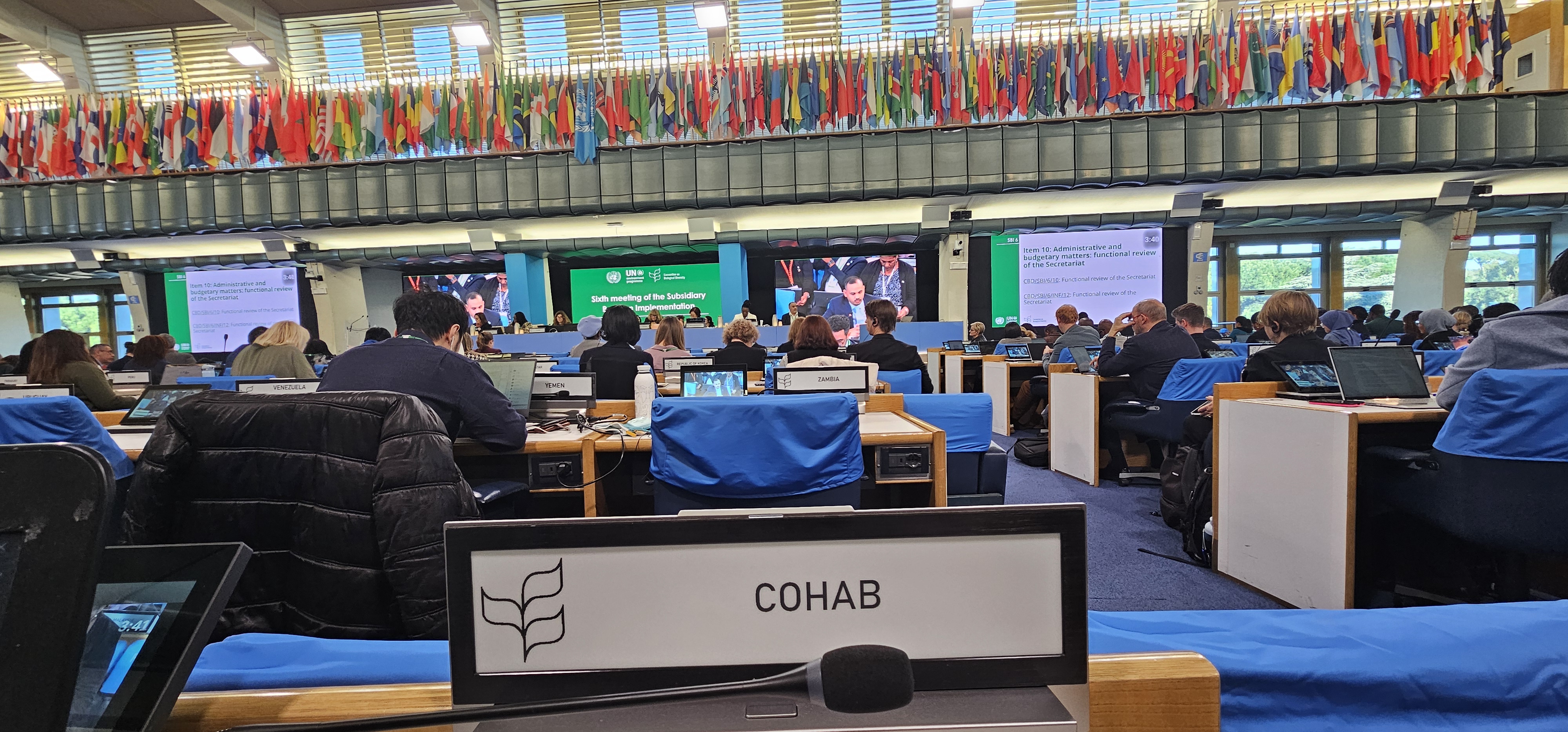
In preparing a new strategy for the period from 2026 to 2030, seeking to build on our experience and achievements of the past 20 years, the Cohab Initiative Secretariat has engaged with partners and others across governments, multilateral institutions, intergovernmental and non-governmental organisations, civil society groups and representatives of indigenous peoples and rural and local communities to gather input and perspectives on our mission and how we work to achieve our aims, recognising that a changing world and new complexities require a willingness to continually adapt, and explore new approaches and interventions.
A key message from this review has been the need for Cohab to be meet growing challenges by increasing focus on certain overarching and emerging issues, and strengthening partnerships by more direct engagement amongst impacted communities, countries and regions. Another key lesson is the importance of promoting and supporting greater integration and capacity within global, national and local institutions and processes to address intersecting crises in a co-ordinated, coherent and effective manner. In addition, the review highlighted the need for Cohab to be able to respond more rapidly to the needs of our partners and the wider international community: helping them to understand and explore these issues, gather and interpret evidence in their specific thematic or local contexts, to recognise interlinkages and respond in a just and unified way.
Cohab’s new strategic programme for the period 2026 to 2030 focuses on three areas:
- Objective 1: Partnerships for People and Planet – Facilitating and strengthening cooperation on health and biodiversity across borders, sectors, disciplines and communities
- Objective 2: Knowledge, Experience and Perspectives - Supporting collaborative approaches in gathering evidence, experience sharing and knowledge exchange on the linkages between biodiversity and health
- Objective 3: Responses for Resilience – Promoting and supporting the integration of health and biodiversity in relevant multi-lateral and national policy frameworks and action plans
Further information on the new strategy can be found here. This strategy and action taken to deliver on it will be reviewed biannually and will be updated as appropriate to ensure we continue to deliver on our mission.
For further information, please contact info@cohabinitiative.org